The Art of Worldbuilding: Artist Interview with Uh!Caribe
“Going viral is exciting, but nothing beats seeing someone step into one of my worlds. “
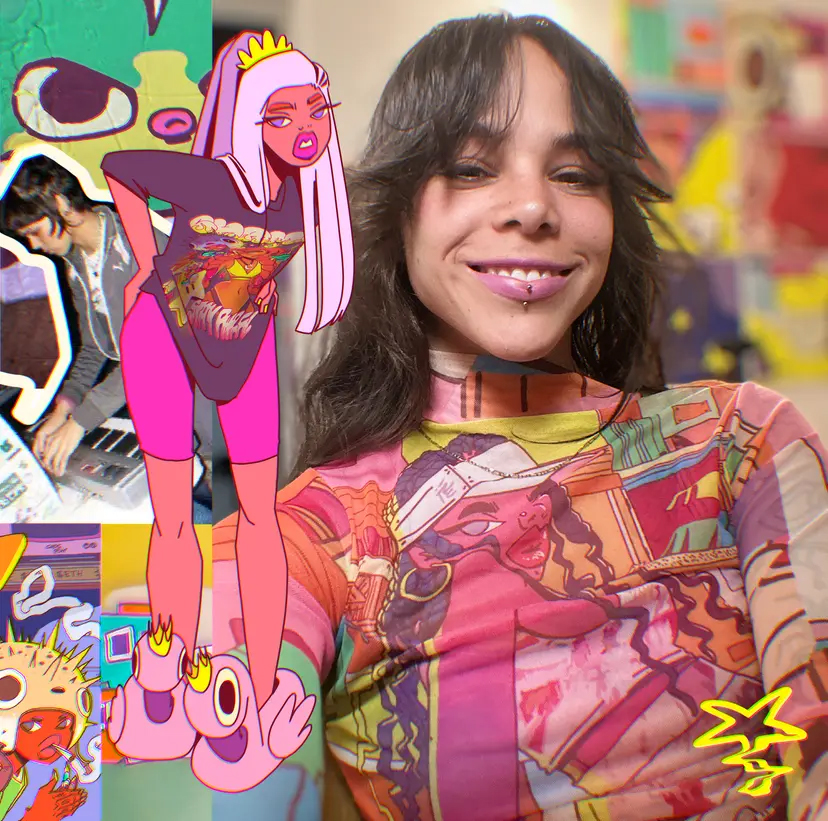
Tamara Hadeed, also known as Uh!Caribe, is an interactive audiovisual artist whose work acts as a bridge between the physical and the digital. Born in Caracas, Venezuela, her creative journey began with the simple tools of the 90s, finding a playground in rooms full of crafts and her first digital canvas in Microsoft Paint.
Based in Colombia today, Tamara works as a multidisciplinary artist, combining animation, character design, sound, and augmented reality to capture and preserve cultural memories of the tropics. From speaking at the United Nations Science Summit to her recent residency in Bali, she continues to push the boundaries of "phygital" art. We sat down with her to discuss her latest exploration: the Paper Console.
From Caracas to Colombia, how has your childhood in the tropics shaped the "visual imaginary" we see in your work today?
My mom loves plants, and I grew up surrounded by them- smelling them, planting them, observing them closely.
Our two-story house in the mountains of the Caracas Valley overlooked the city and, in the distance, the Caribbean Sea. Around us, the city expanded constantly in an informal way, and I was always fascinated by the materials of these new houses: zinc, wood, cement, bars, and barbed wire.
Despite the threat of a very dangerous city, I always found beauty in it. Each of its details became part of my visual imaginary.
I find representation in portraying the places I inhabit through symbols that capture my attention wherever I go. It is, for me, the art of belonging.
You’ve described a 2001 electronic music event as a major turning point. How did that moment lead you to combine sound and motion in your art?
It was my first rave party, and as soon as I walked in, I was completely hypnotized by the visuals, the colors, the rhythm.
It only took one night to shape my entire career. In that moment, I decided I wanted to become a VJ (live visuals artist) too, creating immersive atmospheres where people can truly enjoy themselves.
You’ve experimented with many AR tools since 2019. Why did Artivive become your platform of choice for creating these immersive "worlds"?
Artivive is intuitive, easy, reliable, and expanding. In 2019, I started exploring spatial AR, but Artivive was the first tool I worked with that allowed my animations to be triggered by physical art, no code, no QR, just the art. As soon as I started integrating it into my workflow, Artivive recognized me as an artist, added me to their creator program, and acknowledged how I push the technology forward by their side. This has led me to trust the app with my AR portfolio and build a loyal relationship with the team.
Your "Phygital Toy" collection recently went viral. What is it like seeing people interact with a physical painting that suddenly "comes alive" on their screen?
One of my goals as a creator using AR is to generate awe, spark curiosity about new layers of reality, to promote a sense of belonging to the experience.
It starts with me: I need to feel surprised by the results once everything is built. Then the challenge becomes translating that feeling to others: through engaging content that invites them to own a piece of it. Going viral is exciting, but nothing beats seeing someone step into one of my worlds. And when their new collectible becomes a conversation starter for guests at home? Even better.
You’ve used AR to showcase your work at the UN Science Summit and in Bali. How do you feel these tools help in "preserving culture" for the digital age?
I believe every piece of art adds to the culture it grows in some with more visibility or impact, but always part of a bigger picture.
Alongside my own views and experiences, which I decode and represent in my visual art, I record original sounds from my surroundings and collaborate with music producers from the Caribbean and African Diaspora. This allows me not only to create immersive experiences, but also to preserve moments in time-like cavemen used to do.
It’s my way of betting on technology to show future observers the many layers that shaped who we are.
Let’s talk about the "Paper Console." What was the inspiration behind turning a paper concept into a functional, interactive videogame environment?
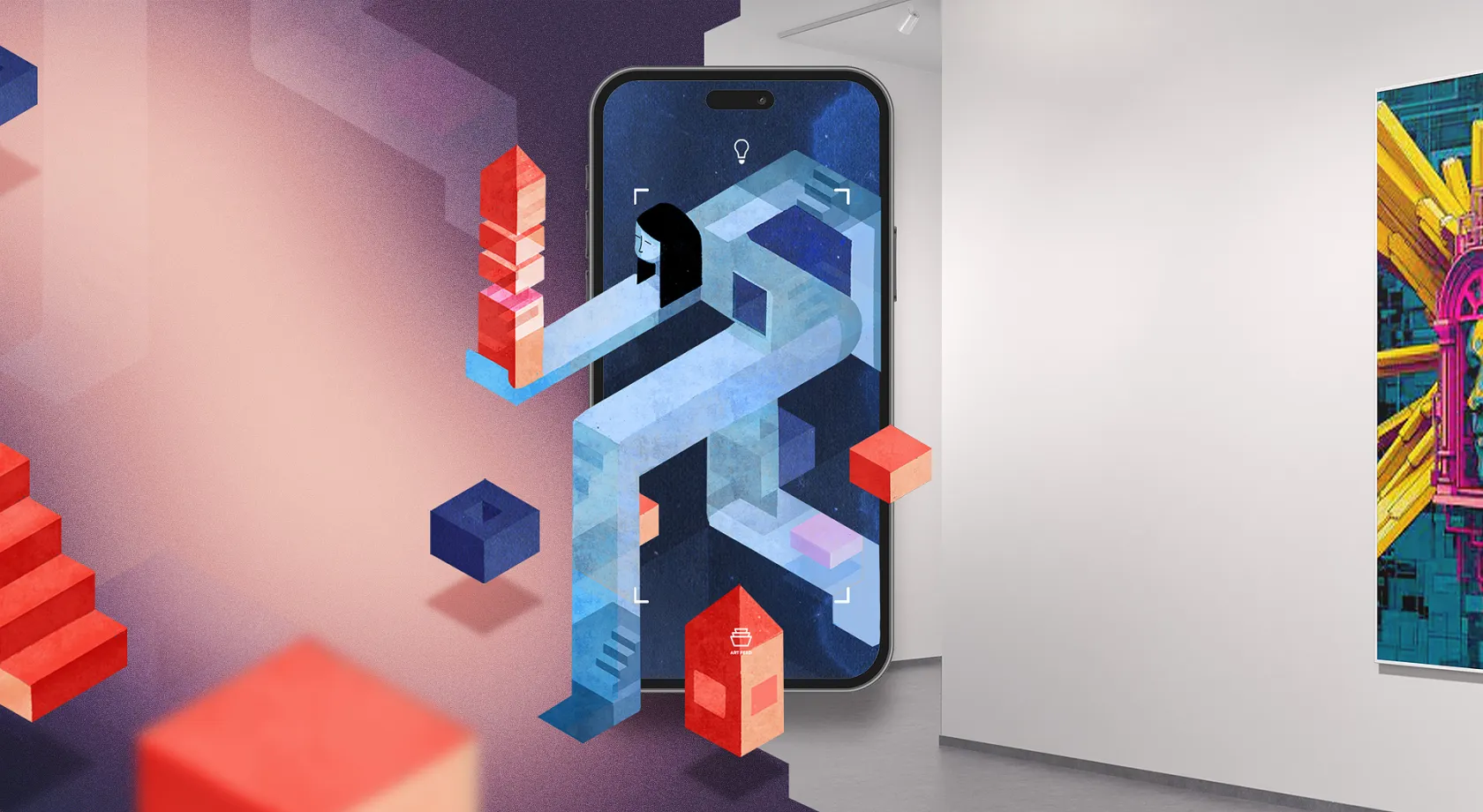
This has been a pretty intuitive exploration. It started with the animation of a video game-like screen about a plant thief or “Urban Plant Collector” as I’ve been calling it.
Once the animation was finished, I felt it needed context beyond the screen; that’s when the idea of the console emerged. While building the console, I began wondering if even more interactivity was possible: could I make a video game playable on a piece of paper through an AR viewing device?
It’s an ongoing project, with the limitations of an experiment I’ve never seen before. The goal is simple: make the buttons work. I’m actively exploring this part with Artivive and can’t wait to share the next steps and results.
What can your community expect from the official launch of your new collection this April?
A collection that invites you to play with an art piece instead of just looking at it from afar. I want my community to interact and play with my art, to discover and collect an immersive experience. Expect further development of the Paper Console and phyigital pieces mixing characters, color, music, concrete, wood, paint, and of course, Augmented Reality.
For artists who are intimidated by technology, what would you say is the biggest advantage of using a "no-code" platform like Artivive?
The best technology is the one that becomes useful and seamless to all types of people.
No Code means you get to focus on making the best of the AR features with your art and without having to learn a completely different skill. I sometimes fantasise about learning how to code, but I would much rather spend my time deepening my art practice, and I know many artists feel the same. With Artivive, it’s possible.
—
“Let me tell you a secret: I’ve spent the last few days vibe-coding my way toward interactivity with the buttons… and I haven’t cracked it yet.
Sharing the project through Artivive has been amazing. I’ve connected with incredible people eager to help, putting their dev skills to the test while I continue experimenting with Artivive’s new Timeline Sequences.
The next few months are going to be super exciting, and everyone who gets their hands on this first prototype will be updated as this very cool project progresses. I can’t wait to see where it goes!”
The Takeaway
With her unique blend of nostalgia and cutting-edge technology, Tamara isn't just making art; she's building an evolving interactive universe.
You can follow her journey and join the "Paper Console" soft launch at https://uhcaribe.art./
Get the Artivive App
Tap into new Dimensions